By the time an Ag Robotics product has accumulated meaningful field hours, the engineering team usually has a clear view of what needs attention before the next build. Some issues are already resolved in hardware or software. Others have produced changes to interconnects, harnessing, calibration, test or service procedures.
The production decision is whether those changes now exist as one controlled build state – a critical part of manufacturing readiness as a program moves from prototype to volume.
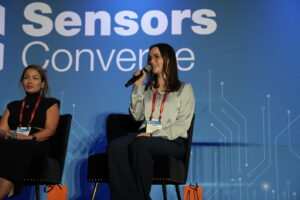
This matters for teams moving from field trials into larger deployments, including many of those who gathered at Ruggedize 2026 in Salinas, California last month. Field performance establishes that the machine does useful work in representative conditions. It does not establish that the same engineering intent can be reproduced consistently across the next production quantity.
An operational prototype and a production-ready product represent different forms of maturity.
Manufacturing Readiness Levels make this distinction explicitly, separating demonstration of a product in an operational environment from evidence that the manufacturing system, materials, processes and quality controls are sufficiently mature to reproduce it. The framework is broader than Ag Robotics, but the distinction applies directly.
A field unit may demonstrate navigation, sensing, mechanical performance and task execution under representative conditions. A subsequent build has to demonstrate something different: that another unit can be manufactured from the released product definition without relying on undocumented intervention from the people who developed it.
Larger deployments introduce another requirement. New field evidence has to be connected back to known configurations, assessed, verified and incorporated into later builds without losing control of what changed or where the change applies.
Four forms of evidence sit behind that decision.
Operating evidence establishes what happened in the field, under what conditions and with what impact on operation.
Engineering evidence establishes the failure mechanism or a sufficiently bounded technical disposition.
Verification evidence demonstrates that the proposed action addresses the original issue.
Production evidence shows that the approved change is present in the controlled build definition and can be reproduced across the units that should contain it.
The value comes from the chain between them.
Consider an intermittent loss of a sensor or compute subsystem during field operation.
The event only becomes useful engineering evidence when it is tied to exposure and configuration. Five occurrences across 20 operating hours carry a different weight from five across several thousand. The same applies if the problem is isolated to one hardware revision, firmware release, harness configuration or component population rather than appearing across the fleet.
Recovery is relevant as well. Did the machine recover autonomously, require an operator restart or need technical support before returning to service? Task completion alone does not show the level of human intervention required to keep a system productive.
Suppose the dropout is reproduced under vibration and investigation identifies movement at an interconnect.
The primary corrective action may be a connector, retention or harness-integration change. If affected assemblies also show variation in harness routing or connector engagement, manufacturing controls may need revision. If the electronics tolerate the transient but the machine unnecessarily abandons the task, fault handling may require a separate system or firmware response. Service diagnostics may also need attention if technicians cannot isolate the event efficiently.
One field symptom can therefore produce actions across product architecture, physical integration, manufacturing control and service.
IN PRACTICE
A neutral manufacturing perspective on an inevitable field concern
During a review of an Ag Robotics assembly, Synergetics noticed a cable leaving a compute module under a tight bend. The harness had been secured further downstream, but there was no vibration strain relief at the connector.
As it turned out, it was a challenge that had been been identified by the scaling OEM’s Head of Engineering, and it had become one of those design details that kept them thinking about the product long after the workday was over, because they understood the field environment their product would eventually have to withstand.
Synergetics brought visibility of alternative solutions to the problem, that aligned with a repeatable manufacturing and scalability perspective – including whether a different connector orientation could reduce the bend and mechanical loading at the interface.
For this OEM and its Engineering team, that input came while the design was still flexible. Connector selection, cable routing, strain relief and mechanical support could be considered together before it became part of the released production build and before the product could materially affect how it performs in service.
Vibration, moisture and field exposure do not act on components in isolation. The way connectors, harnesses, electronics, chassis interfaces and environmental protection come together can matter just as much as the individual parts selected. We apply that perspective across cable and harness integration, conformal coating, potting and other protection requirements used in ruggedized electronic assemblies.
Verification should then return to the original failure condition. For the interconnect example, that may mean testing the revised connector, retention method or harness arrangement under the loading that produced the dropout and recording the result against an agreed acceptance criterion.
A later prototype that performs successfully provides weaker evidence if the original failure mechanism has not been exercised again.
The same applies where engineering intervention is carrying part of the solution. If a prototype works because an engineer manually loads a firmware revision, adjusts a parameter, changes a component or corrects an assembly condition, the manufacturing definition is still incomplete.
The approved condition has to reach the build.
A connector revision may affect the BOM, approved material set, drawing and assembly instruction. A firmware dependency needs to appear in the programming process. A field escape may require a different inspection point or production test.
Effectivity also needs to be defined: which build or serial number receives the change, what happens to work in progress and whether deployed units require monitoring, retrofit or service action.
IN PRACTICE
When a buildable design still needs a production path
On one autonomous agricultural EV program, a scaling statup had developed a PCBA design that relied on an unconventional soldering approach they believed was necessary to achieve the required system performance.
Synergetics was able to support the immediate build using a highly skilled manual process, allowing the program schedule to keep moving while the product was still in development.
The issue was what would happen if that same manufacturing method had to support larger production quantities. Output would remain tied to specialist labor, increasing pressure on cycle time, capacity, cost and process consistency as demand grew.
Alongside the immediate build, we worked with the founder and VP of Engineering on DfM concepts to move the design toward a production approach better suited to automation and repeatable manufacturing.
A design can work as intended and still create avoidable production constraints if the chosen implementation depends on a highly manual, specialist process.
For a significant field issue, seven pieces of evidence should be visible at release:
This Field-to-Build Closure Gate does not replace the OEM’s engineering, quality or release process. It provides a practical check that field evidence has made it through to the build being authorized.
Closing a field issue does not automatically justify more inspection, longer test sequences or deeper traceability.
A failure caused by assembly variation may be better addressed through the assembly process or an upstream inspection point. A condition that only becomes visible under power may justify functional test. Component-level traceability may be appropriate where identifying an affected deployed population later would cost more than capturing the information during manufacture.
Fleet scale changes the calculation as well.
A 20-minute recovery may be insignificant during a trial. Repeated across a commercial fleet, it affects productive time, support requirements and service cost.
Production test, configuration control, traceability and serviceability should therefore be matched to the risk they reduce and the downstream cost they avoid.
Synergetics supports OEMs, startups and scaleups when engineering intent has to be converted into controlled, repeatable hardware.
That can include NPI, PCB assembly, cable and harness assembly, electromechanical integration, box build, inspection, agreed functional testing and the build records defined for the program.
For a field-driven change, the manufacturing work is specific. A revised connector has to reach the correct materials and assembly information. A firmware dependency has to be controlled at programming. A new inspection requirement has to be repeatable on the production floor. A production test introduced after a field escape has to provide useful coverage at the required build rate.
Where configuration or traceability matters to later containment, the relevant information has to be captured during the build.
For an Ag Robotics product moving beyond field trials, repeatable production is therefore supported by a clear evidence chain: what happened in the field, what engineering changed, what verified the change, what entered the released manufacturing definition and which units contain it.
If your next Ag Robotics build is approaching release, we can discuss your current build package, known field issues, and test or traceability requirements. Synergetics works with teams on NPI, electronics integration, production testing and configuration control required to carry the approved product definition into the next build.
Want to speak with someone directly?
Skip the call-back wait and contact Matt Delorio on 408.685.1102 or email him here to discuss your program.
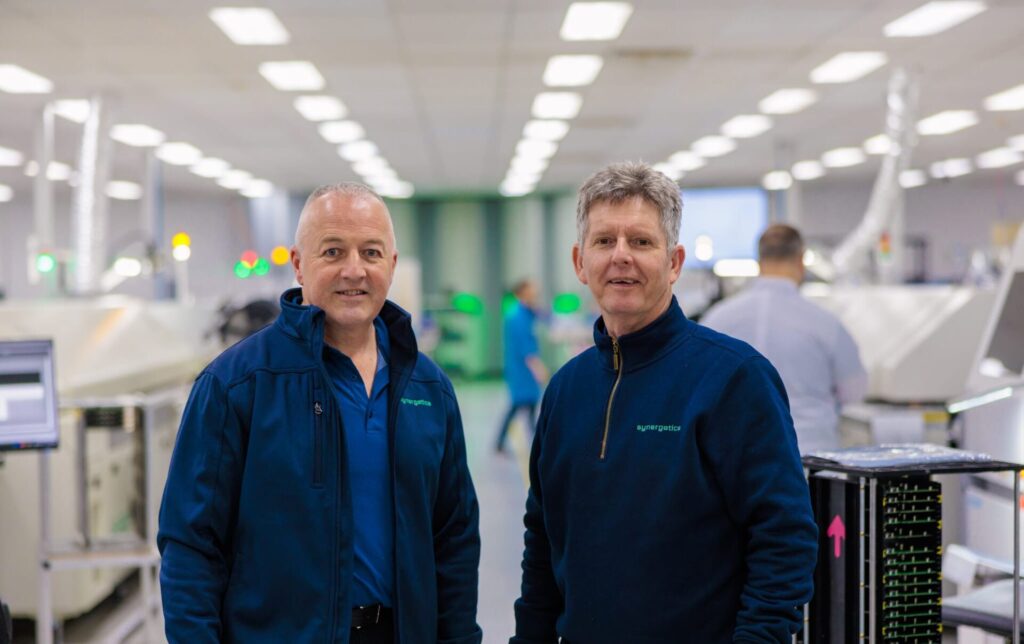
About Synergetics Manufacturing Inc
Synergetics is a contract manufacturer for medical, military, homeland security and industrial sectors in the USA. For over 30 years, Synergetics has established a reputation for high-quality products and services, flexibility and responsibility to customers. Our services include quick turnaround, locally produced prototypes and advanced electronics manufacturing, including PCBA, box-build assembly and full system-level testing.
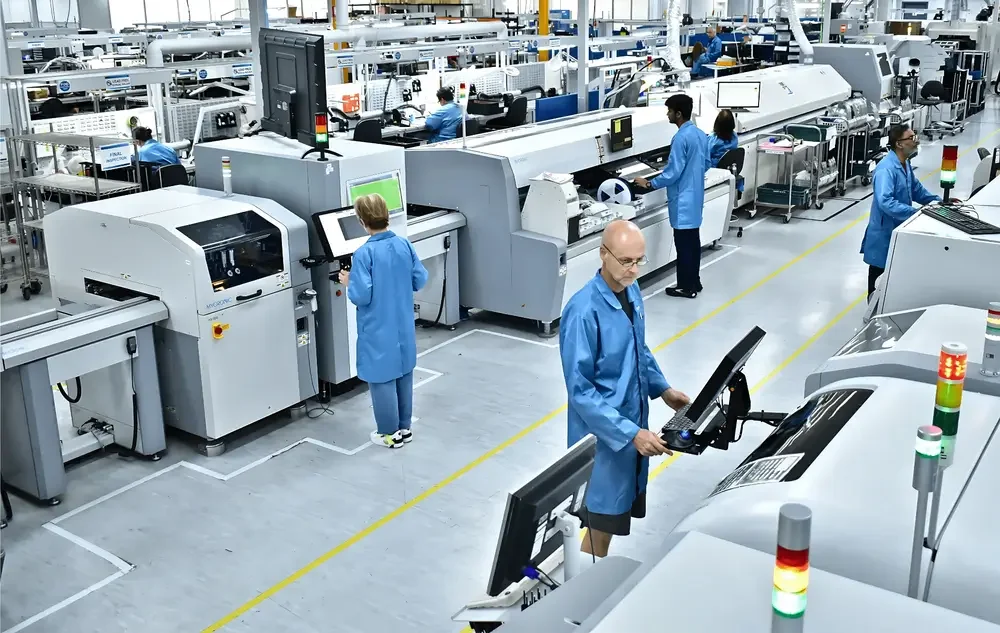
About the Extel Group
Extel Technologies provides advanced electronics engineering, manufacturing and sustainment services for high-reliability systems across defense, aerospace, medical, data infrastructure, autonomous systems and industrial sectors. With AS9100D, ISO13485 and DISP-certified operations, Extel delivers precision and compliance from design to long-term support – trusted by global primes and innovators for over 35 years.
Media Inquiries
For further information or media inquiries, please contact:
Synergetics Manufacturing Inc
jeff.thomas@emsynergetics.com